Welcome to Tianzhen County Tonghang Grain Trade Co., Ltd!
Tel: +86-352-6981998 Mailbox: thx@tzhlm.com

NEWS
TONGHANG

Message feedback
If you have any questions, please leave your contact information, or contact us, thank you for your support and trust, we will be happy to provide you with quality products and services!
Food security is more important than Taishan
Release time:
27 May,2024
Author:
Source:
Abstract
Food security is more important than Taishan
China's three ministries issued "grain security project"
Jiao Jian
Editor's note: the national development and Reform Commission, the State Grain Administration and the Ministry of Finance recently jointly issued the construction plan for the security guarantee project of grain collection, storage and supply. This is the first national-level special plan for the construction of grain circulation infrastructure. The plan puts forward five major goals for food security and three main channels for grain outflow, and it is clear that a new warehouse capacity of 100 billion jin will be built before the end of this year.
The plan also mentions the establishment of a stock grain identification code system to realize the whole process supervision and traceability mechanism of "from field to table" and "code with grain. In fact, China's food processing industry, especially the food processing industry, has been calling for the establishment of a raw material traceability system for a long time. Only by controlling every link from planting, production to sales can it be possible to ensure China's food safety.
Another year when the summer grain harvest. When the bumper harvest is a foregone conclusion, how to "return the grains to the warehouse" and ensure food security has become the focus of attention of all decision-making parties. Recently, the National Development and Reform Commission, the Ministry of Finance, and the National Grain Administration jointly issued the "Grain Collection, Storage and Supply Security Project Construction Plan (2015-2020)" (hereinafter referred to as the "Grain Security Project"), which proposed a series of related measures.
In China's current food security-related policy pattern, this is the first time that the central ministries and commissions have systematically mentioned the innovation of storage, circulation and production and marketing regulation systems, in addition to long-term priorities such as stimulating farmers' enthusiasm for growing grain and establishing the bottom line of planting area.
According to the plan, the main contents of the "Grain Security Project" will include: building grain and oil storage facilities, opening up grain logistics channels, improving the emergency supply system, ensuring the quality and safety of grain and oil, strengthening grain monitoring and early warning, and promoting grain conservation and loss reduction.
At present, China's grain reserves are mainly three levels of reserves, such as central reserves, local reserves and farmers' reserves. All national grain reserves are divided into three categories. One is the World Bank loan to build a grain depot with a storage capacity of 4.8 million tons; the second is the investment of national debt projects in grain depots with a total storage capacity of 52.6 million tons; the third is that from 2009 to 2014, the central government will subsidize localities and central enterprises to build grain depots with a storage capacity of 34.8 million tons.
In this "grain security project" plan, "by the end of 2015, China will have 50 million tons of new storage capacity, and 60% of the maintenance and renovation of the' old dangerous stores' can be regarded as a bright spot." A food industry expert said to reporters.
In the past 11 years, China's total grain output has been increasing, but the country's storage space has not increased accordingly. Therefore, when the summer grain harvest was determined in June 2014, the executive meeting of the State Council specially discussed the issue of grain storage, and decided to build a new storage capacity of 100 billion jin within two years, focusing on the northeast and southern rice producing areas.
Regarding the necessity of implementing the "Food Security Project", Ren Zhengxiao, director of the State Grain Administration, said frankly before: After China's grain output, the total amount of waste caused by storage, transportation, and processing alone will reach more than 70 billion catties each year. 5.8 of the country's total grain production in 2013.
Among them, China's farmers' grain storage accounts for nearly half of the country's total annual grain output. However, due to the poor storage facilities of farmers, the annual grain loss due to moldy, moth-eaten or eaten by rats and birds amounts to more than 40 billion kg. According to the reporter's previous field investigations in Jiangsu, Shandong and other provinces, the national farmers' grain storage loss rate is 8% to 10%, and the loss rate in some areas is even as high as nearly 20%.
Moreover, when grain enters the logistics link, nearly 180 billion kg of storage space in all kinds of warehouses of grain enterprises across the country belong to the list of "dangerous warehouses and old warehouses. Although many grain storage facilities are not completely open-air grain storage, they are generally not good in terms of thermal insulation, moisture-proof and rain-proof, and air tightness, which will directly lead to food waste. At present, most of China's grain logistics methods also use package grain transportation, which causes large losses in the process of packaging and unloading.
The planning time period of the "Food Security Project" is from 2015 to 2020. According to the vision, the future grain post-production savings and losses will achieve significant results. Every year, the loss and waste in the post-partum circulation of grain will be reduced by more than 13 million tons (26 billion kg), and the loss and waste rate will be reduced by more than 40%. Grain consumption will be more scientific and reasonable, forming a long-term mechanism for grain saving and loss reduction in the whole society.
At the same time, in terms of implementing investment in related projects, the "Grain Security Project" notice stated that the government's investment guidance role should be brought into play, and the construction of grain storage facilities in the future will be listed as one of the key areas of public financial investment. The division of powers and expenditure responsibilities are implemented separately. The three ministries and commissions stated that if the central government's investment support is really needed, it will give priority to supporting major projects such as grain storage facilities in major grain-producing areas and modern cross-regional grain logistics in light of the priorities and principles of the central investment arrangements.
The "grain security project" plan also clearly mentioned the current hot PPP problem. "What can be solved through marketization should attract more social capital investment. We should relax and reasonably guide the market to diversify the investment and operation areas, and gradually establish a 'negative list' release system, so that all kinds of market entities can equally enter the investment areas outside the list in accordance with the law." Notice said.
In addition, the establishment of a national grain situation monitoring and early warning system mechanism has also been put on the agenda, and the "Grain Security Project" plan puts forward requirements for this: integrate existing grain information resources, build a grain situation monitoring and early warning system including information collection, police analysis, and information release, establish and improve the inventory grain identification code system, promote the construction of "smart grain", and enhance the foresight, pertinence and effectiveness of the national regulation and control market.
According to the reporter's information, the so-called stock grain identification code is a carrier that can record information such as grain origin, harvest year, circulation track, grain quality, etc. At present, it has root code, current code, two-dimensional code and other identification types, which can be generated separately according to each stock location stored in grain. Once the inventory grain identification code system is popularized, it is expected to realize the whole process supervision and traceability mechanism of "from field to table" and "code with grain. In the event of a food quality or safety problem, it is easier to pursue the missing and problematic links.
"This application will have an important impact on the government's grain purchase policy, inventory supervision, quality management, emergency support and statistical investigation." A relevant person in charge of the State Grain Bureau has said so.
RELATED NEWS
27 May,2024
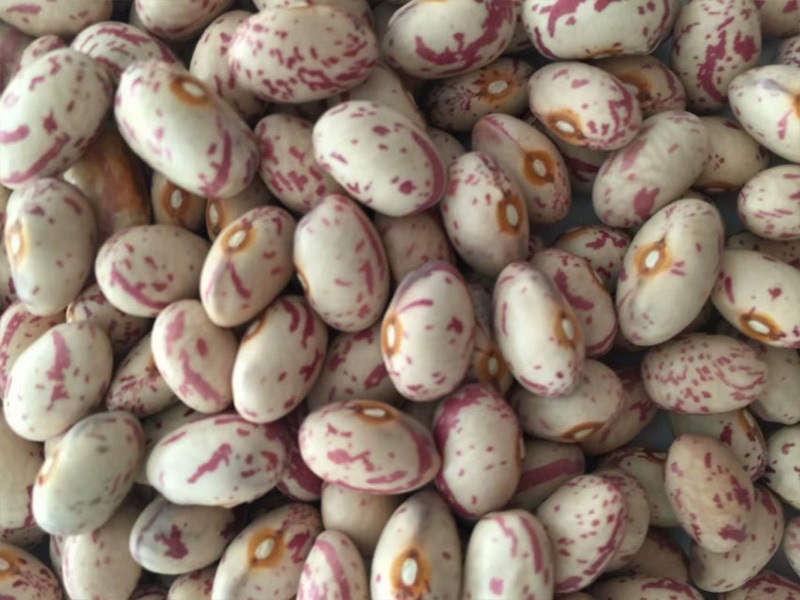
What should I pay attention to when storing grains?
Coarse grains, including all kinds of beans, corn, millet, etc., are an important part of our daily diet, with rich nutritional value and health functions. Because of its unique growing environment and harvesting characteristics, the storage of coarse cereals becomes an important task. Below we will detail the precautions for the storage of grains.

27 May,2024
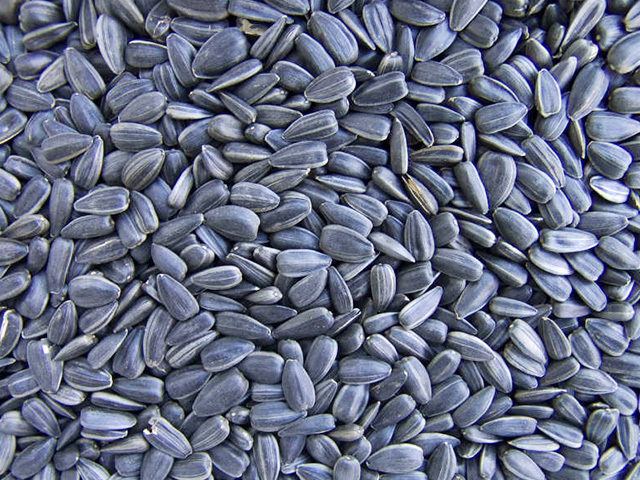
What are the prospects for the development of the grain industry?
With consumers' pursuit of healthy diet and the increasing demand for diversified food, the miscellaneous grain industry has gradually emerged and shown broad development prospects. As one of the important food sources, coarse cereals have rich nutrients and unique taste, and are deeply loved by consumers. At the same time, its efficacy in health preservation and health care has also been recognized by more and more people, which has further promoted the development of the coarse cereals industry.
27 May,2024
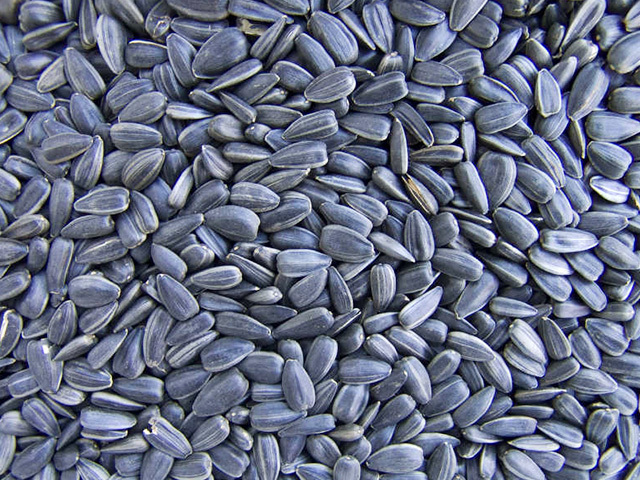
The climatic conditions required for growing grains
Climatic conditions for growing grain crops are essential to ensure healthy growth and good harvests of grain crops. Different grain crops have different requirements for climate, but in general, the impact of climate conditions on the growth of grains cannot be ignored. The following will detail the climatic conditions required for growing grains.
27 May,2024
Food security is more important than Taishan
Editor's note: the national development and Reform Commission, the State Grain Administration and the Ministry of Finance recently jointly issued the construction plan for the security guarantee project of grain collection, storage and supply. This is the first national-level special plan for the construction of grain circulation infrastructure. The plan puts forward five major goals for food security and three main channels for grain outflow, and it is clear that a new warehouse capacity of 100 billion jin will be built before the end of this year.

10 Oct,2020
10 Oct,2020

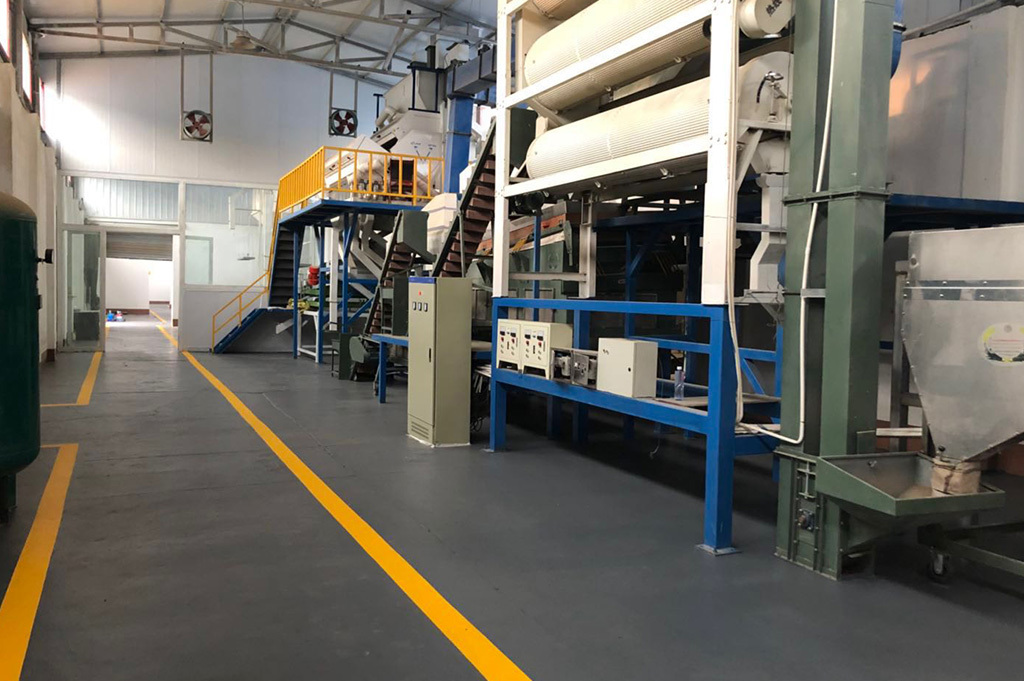
We are a collection of planting, acquisition, storage, processing, export as one of the small grain business enterprises,
The existing planting base is 200000 mu, with an annual production and processing capacity of 20000 tons and an annual sales income of more than 100 million yuan,
The company's annual average export earnings of more than 500 million US dollars, is a provincial and municipal leading export enterprises, China's quality integrity enterprises.
Message feedback
Contact Information
West Gate, Tianzhen County, Datong City, Shanxi Province
